Trading Tired: How Fatigue Quietly Wrecks Your Decisions

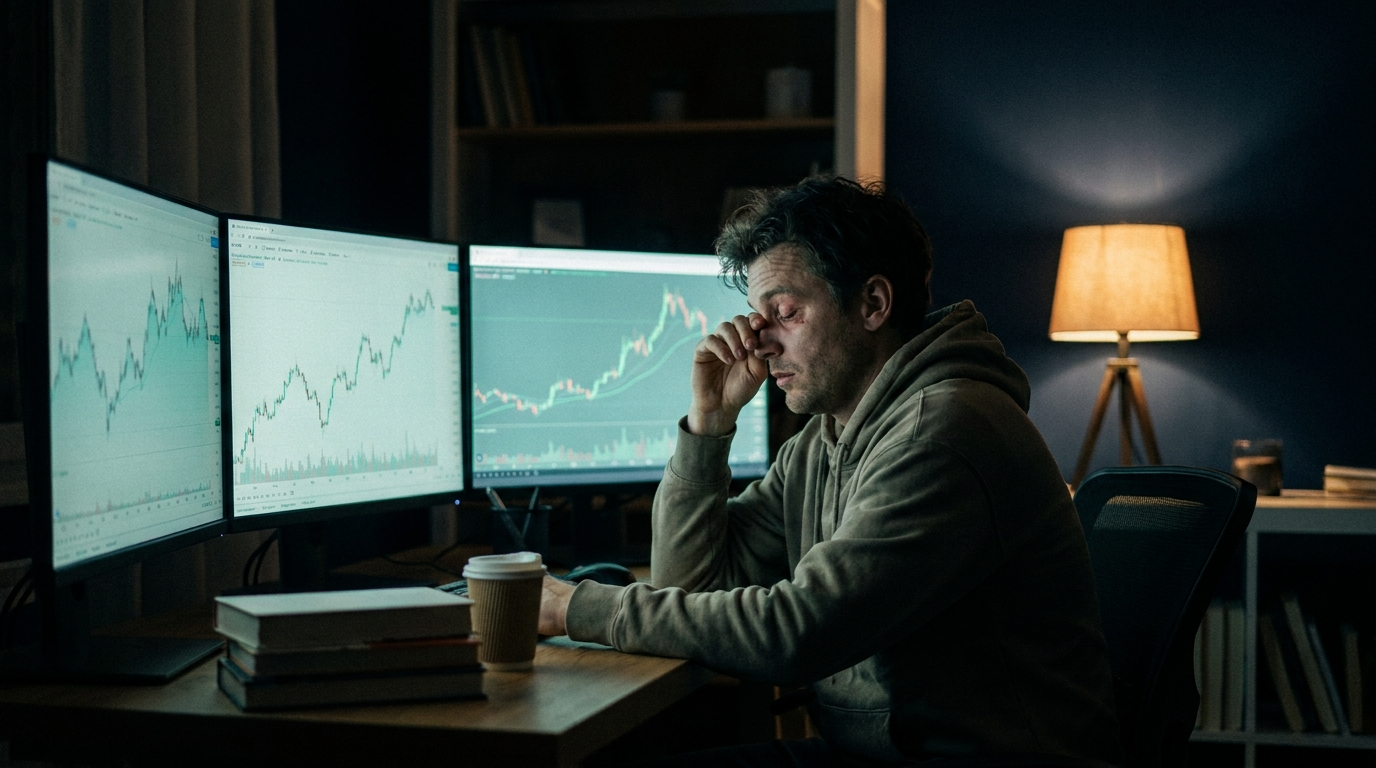
Fatigue is one of the most underrated risks in trading, and the reason is simple: a tired brain does not feel broken, it feels normal. You do not get a warning light. You sit down, the screens look the same, your strategy is where you left it, and you feel basically fine. Meanwhile the part of your brain that resists impulses, weighs risk, and waits for good setups is running at reduced capacity, and you cannot feel the difference. That gap between how capable you feel and how capable you are is exactly where fatigue does its damage. Fatigue erodes the attention active trading demands, which FINRA's day-trading guidance describes as time- and focus-intensive, and its note on frequent intraday trading reinforces.
This matters because trading is almost pure decision-making under uncertainty, which is precisely the kind of work fatigue degrades first. You can be physically functional, hold a conversation, answer email, and still be in no state to make the disciplined, patient decisions that trading demands. The danger is not that you feel too tired to trade; it is that you do not.
Here is how fatigue quietly wrecks your trading and what to do about it. In this guide we will cover why a tired brain feels normal, what fatigue actually does to your decisions, the specific traps tired traders fall into, and how to trade around fatigue instead of through it.
Key Takeaways
- Fatigue is invisible from the inside. A tired brain feels normal, so you rarely notice the impairment in real time.
- It hits the exact skills trading needs. Impulse control, patience, and risk judgment degrade first under fatigue.
- The traps are predictable. Overtrading, ignoring rules, chasing, and forcing setups all spike when you are tired.
- Willpower is not the fix. You cannot reliably out-discipline a tired brain; you have to manage the conditions instead.
- Protect the decision-maker. Treat your rested attention as the scarce resource it is, and trade only when you have it.
Table of Contents
- Why a Tired Brain Feels Normal
- What Fatigue Actually Does to Trading
- The Traps Tired Traders Fall Into
- How to Trade Around Fatigue
- The TradeFundrr Standard: Protect the Decision-Maker
Why a Tired Brain Feels Normal
The cruel thing about fatigue is that the same brain that is impaired is the one judging whether it is impaired. When you are tired, your self-assessment is tired too, so you tend to rate your own state as fine right up until the consequences arrive. This is not a character flaw; it is how fatigue works. The impairment is real, but the alarm that should warn you about it is exactly the system that has gone quiet.
Compare it to other risks, where you usually get a signal. A scary chart looks scary. A big loss feels like a big loss. But fatigue arrives without a matching feeling of danger, which is why traders routinely make their worst decisions while believing they are perfectly capable. The absence of a warning is the warning, if you know to look for it.
No Warning Light for Tired
You would not drive after thirty hours awake, because the danger is culturally obvious. At the screen, the same impairment carries no such obvious signal, so traders push through late nights, early mornings, and long sessions as if alertness were free. The lack of a visceral "I am too tired for this" feeling is precisely what makes fatigue so easy to ignore and so costly when ignored.
The Impaired Judge Judging Itself
Because your judgment is the thing being degraded, you cannot fully trust your in-the-moment read of your own sharpness. The practical implication is that you should not rely on feeling tired as your cue to stop. By the time you clearly feel it, you have likely been trading impaired for a while. The cue has to come from the conditions, not the feeling.
What Fatigue Actually Does to Trading
Fatigue does not dull all mental functions evenly. It hits hardest exactly where trading is most demanding: the executive functions that govern impulse control, patience, working memory, and risk assessment. These are the faculties you use to wait for your setup, size correctly, respect your stop, and resist the urge to act for the sake of acting. Tired, all of them weaken at once.
The result is a trader who is more impulsive, less patient, worse at holding a plan in mind, and more tolerant of risk than they would normally be, all without feeling different. It is the perfect setup for mistakes, because the very faculties that would catch the mistakes are the ones offline. Fatigue does not make you trade badly by accident; it removes the specific brakes that keep you trading well.
You see valid setups late.
Rules start to feel optional.
Low focus plus restlessness fills the gap.
A tired brain skims instead of reading.

Impulse Control and Patience Go First
The two faculties trading relies on most, the patience to wait and the impulse control to not act, are among the first to fade under fatigue. A rested trader can sit on their hands through a quiet hour; a tired one feels an itch to do something and gives in to it. Most fatigue-driven losses trace back to this: an action taken not because the setup was there, but because waiting had become too hard.
Risk Judgment Quietly Slips
Fatigue also nudges your sense of risk, usually toward taking more of it. A position size that would feel aggressive when rested feels acceptable when tired, and a stop that would feel essential feels skippable. Because this slippage is gradual and unfelt, traders often size up or loosen their risk late in a session without ever deciding to, simply because their risk thermostat has drifted.
The Traps Tired Traders Fall Into
Because fatigue degrades the same faculties every time, it produces the same handful of mistakes in nearly every trader. Overtrading is the most common: with impulse control down and patience thin, tired traders take marginal setups just to be active. Closely related is rule-bending, where the limits you respect when sharp start to feel like suggestions when tired.
The other two are chasing and forcing. Chasing happens when a tired brain reacts late to a move and jumps in after the good entry has passed, unwilling to accept it was missed. Forcing is manufacturing trades on a quiet day because doing nothing feels intolerable in a low-focus state. All four share a root cause: the brakes are off, and the urge to act has nothing holding it back.
Overtrading and Bending Rules
The signature tired-trader pattern is doing too much and following the rules too little. These two reinforce each other: the more marginal trades you take, the more you have to bend your own rules to justify them, and the more bent the rules get, the more marginal trades feel acceptable. A sharp trader notices this spiral; a tired one is in it before they realize.
Chasing and Forcing Trades
Chasing and forcing are both fatigue trying to satisfy an itch. The tired brain wants the feeling of participating, so it reacts late to moves it should have let go and conjures trades out of conditions that offer none. Neither comes from analysis; both come from the discomfort of stillness that fatigue makes harder to tolerate. Recognizing them as fatigue symptoms, not strategy, is the first step to stopping them.
How to Trade Around Fatigue
The key insight is that you cannot reliably out-discipline a tired brain, because discipline is exactly what fatigue erodes. The solution is not more willpower in the moment but managing the conditions in advance, so that your trading decisions are protected from your tired state rather than left to fight it.
- Set hard limits before you are tired. Decide your stop-trading time and max trades while rested, then obey them mechanically.
- Treat sleep as part of your edge. A rested decision-maker is the asset; protect it like one.
- Watch the conditions, not the feeling. Stop based on hours slept and time at the screen, not on whether you feel tired.
- Reduce size or stop when impaired. If you must trade tired, trade smaller, or better, do not trade at all.
- Schedule trading for your sharp hours. Match your most important decisions to when you are most alert.
Manage Conditions, Not Willpower
Every effective fatigue defense works by removing the decision from your tired self and giving it to your rested one. A stop-trading time set in advance does not require willpower at midnight; it just requires you to honor a rule you already made. This is the whole trick: make the disciplined choices while sharp, and let those choices govern you while tired, instead of asking a depleted brain to summon discipline on demand.
The TradeFundrr Standard: Protect the Decision-Maker
The most useful reframe is to see your rested attention as the scarce, valuable asset that it is, and to protect it the way you would any other edge. Fatigue does not announce itself, it attacks exactly the faculties trading needs, and it cannot be beaten with willpower in the moment. The only reliable defense is to manage the conditions in advance, trading when you are sharp and stepping away when you are not.
A structured, simulated environment is a good place to build these habits, because you can establish your fatigue rules, your stop-trading times, and your sharp-hours schedule without your savings on the line while you learn what works for you. The discipline of protecting the decision-maker is the same whether the account is simulated or not, and building it early means it is already in place when it matters most.
Trading tired is dangerous precisely because it does not feel dangerous: a tired brain feels normal while quietly making your worst decisions. TradeFundrr gives you a structured, simulated environment with clear rules to develop the habit of trading only when you are genuinely sharp. Set your limits while rested, watch the conditions rather than the feeling, and protect the decision-maker, because in trading, your rested attention is the edge.
Frequently Asked Questions
Why is trading while tired so risky?
Because a tired brain feels normal, so you rarely notice the impairment in real time. Fatigue degrades exactly the faculties trading needs most, impulse control, patience, and risk judgment, while leaving you feeling capable. You end up making your worst decisions while believing you are fine, which is what makes it so quietly costly.
How does fatigue actually affect my trading decisions?
It weakens the executive functions that govern patience, impulse control, working memory, and risk assessment. The result is a trader who is more impulsive, less patient, worse at holding a plan in mind, and more tolerant of risk, all without feeling different. Fatigue removes the specific brakes that keep you trading well.
What mistakes do tired traders make most?
Four predictable ones: overtrading by taking marginal setups, bending rules that feel like suggestions when tired, chasing moves after the good entry has passed, and forcing trades on quiet days because stillness feels intolerable. All four come from the same root: fatigue takes the brakes off the urge to act.
Can I just push through fatigue with discipline?
No, because discipline is exactly what fatigue erodes. You cannot reliably out-willpower a tired brain in the moment. The effective approach is to manage the conditions in advance, setting your limits while rested and letting those rules govern your tired self, rather than asking a depleted brain to summon discipline on demand.
How do I know when I am too tired to trade?
Do not rely on feeling tired as the cue, because by the time you clearly feel it you have likely been impaired for a while. Watch the conditions instead: hours slept, time at the screen, and time of day. Set a stop-trading time in advance based on those, and honor it mechanically rather than judging your sharpness in the moment.
What should I do if I have to trade while tired?
Ideally, do not. If you must, reduce your size, stick rigidly to limits you set while rested, and avoid any discretionary or marginal trades. Better still, schedule your trading for your sharp hours so the important decisions land when you are alert, and treat sleep as part of your edge rather than an optional extra.
Can I practice managing fatigue in a simulated account?
Yes, and it is a good place to do it. A structured, simulated environment lets you build your fatigue rules, stop-trading times, and sharp-hours schedule without your savings on the line while you learn what works. The habit of protecting your rested attention is identical whether the account is simulated or not, so building it early pays off later.
Why is trading tired risky in a funded account?
Because fatigue slows your decisions and weakens discipline, so you miss exits, force trades, and misjudge risk, any of which can breach a limit. In a funded account, a tired session is a poor-state session. Sitting out when exhausted protects the account.
Should I trade when I'm tired?
Usually no. When you are tired, rushed, or distracted, your judgment drops and rule breaches become more likely. In a funded account, treating fatigue as a reason to sit out, like any other missing condition, is the disciplined choice that preserves your limits.
Trade when you are genuinely sharp
Build the habit of protecting your decisions in a structured, simulated environment with clear rules.
Get Funded →